


THE SECRET OF HAPPINESS
Religion January 9, 2013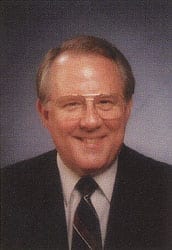
This sermon was preached by pastor Paul Mims at Cornerstone Baptist Church in Cherry Log, Georgia on January 6th, 2013.
Luke 2:41-512013! Can you believe that we have begun another year! We measure our lives in segments of time called years. Time is very important to us. Being able to tell time and know what the time is in our lives is very important. Happy New Year! How many times have you heard it?
Victor Borge once said that he could tell time by playing the piano. A friend said to him, “O you can’t do that.” Borge said, ‘Let me show you.” So he started playing and banged out a loud march. Pretty soon there was a rapping on the wall and a shrill voice said, “Stop that noise! Don’t you know it is 1:30 in the morning?” He said, “See.”
Time is very precious to us. It is also very expensive. Thirty seconds of commercial time in the super bowl this year will cost almost $4 million. This could build four churches like Cornerstone.
There are two questions that are vital and we must choose the one on which to focus. They are: “What will happen to me this year?” and “What will I cause to happen this year?” The first question is passive in nature and asks about things over which we have no control. The other is pro-active and focuses on what we can cause to happen. Happiness is not based on what happens to us, but on who we are and what the Lord uses us to cause to happen for his glory.
The Bible teaches that we can do much to create what is going to take place this year. In our scripture passage for today there are seven attitudes of Jesus that, in effect, create what was going to happen in his life. And He was only twelve.
I. WE MUST BE RESPONSIBLE FOR OURSELVES. “Every year his parents went to Jerusalem for the Feast of the Passover. When he was twelve years old, they went up to the feast, according to the custom.” vv. 41-42
You have to read between the lines and know the background of what is happening here. Every year, Joseph and Mary went up to Jerusalem for the Feast of the Passover. When Jesus was twelve years of age they took him with them possibly for the first time. He was so intrigued when he saw the Temple. He was approaching the time when a boy of twelve would take upon himself the responsibilities of the law. He would be called a Son of the Covenant, a son of the Law. Our modern Jewish friends called it the Bar Mitzvah. This is when a young lad takes upon himself the responsibility for his faith.
For the first twelve years of his life Jesus was nurtured and taught by his parents. Now he knew that he was at the time when he must take responsibility for himself. You and I can establish what we can cause to happen if we will accept responsibility for ourselves. We are living in a day when people blame others for what happens to them. We must say at the beginning of 2013 “I am responsible for what I cause to happen to me and others this year.”
Will Rogers once said, “The history of North America could be written in three phases: The passing of the Indian, the passing of the buffalo, and the passing of the buck.” Nobody is responsible for anything. The mother said to Tommy, “Stop pulling the cat’s tail.” Tommy said, “I’m not pulling the cat’s tail. I’m standing on it and he is doing the pulling.” We must be responsible for ourselves.
Consider this story told by Bernard L. Brown, Jr., president of the Kennestone Regional Health Care System in the state of Georgia. Brown once worked in a hospital where a patient knocked over a cup of water, which spilled on the floor beside the patient’s bed. The patient was afraid he might slip on the water if he got out of the bed, so he asked a nurse’s aide to mop it up. The patient didn’t know it, but the hospital policy said that small spills were the responsibility of the nurse’s aides while large spills were to be mopped up by the hospital’s housekeeping group. The nurse’s aide decided the spill was a large one and she called the housekeeping department. A housekeeper arrived and declared the spill a small one. An argument followed. “It’s not my responsibility,” said the nurse’s aide, “because it’s a large puddle.” The housekeeper did not agree. “Well, it’s not mine,” she said, “the puddle is too small.” The exasperated patient listened for a time, then took a pitcher of water from his night table and poured the whole thing on the floor. “Is that a big enough puddle now for you two to decide?” he asked. It was, and that was the end of the argument.
II. WE MUST BE ACCOUNTABLE FOR WHAT WE DO. “After three days they found him in the Temple courts sitting among the teachers, listening to them and asking them questions.” v. 46
Luke tells us this story to show that Jesus was aware of who he was at twelve years of age. In Luke’s account he jumps from the birth narrative and skips the years until he was twelve. He tells us this story of Jesus in the Temple to illustrate that Jesus knew that he had a mission to perform. Jesus was a normal boy and had to grow just like any other boy, but his realization came that he was here for a purpose.
We are all here by Divine appointment. There is a reason why each one of us has been placed here on earth. God has a plan for your life – something for you to do – that only you can fulfill. I was expressing this truth recently to grandson, Paul, and told him that he would find his life’s purpose in the plan of God for him which he will discover through his gifts and passion.
Soren Kierkegaard, the Danish philosopher, said, “Only a Christian can live wholly in the present for the past is pardoned and the future is safe in God.” This makes us accountable to God.
A recent survey of Discipleship Journal readers ranked areas of greatest spiritual challenge to them:
1. Materialism. 2. Pride. 3. Self-centeredness. 4. Laziness. 5. (Tie) Anger/Bitterness. 5. (Tie) Sexual lust. 7. Envy. 8. Gluttony. 9. Lying.
III. WE MUST HAVE A SUPREME ALLEIGENCE TO GOD. “Why were you searching for me?” he asked. “Didn’t you know that I had to be in my Father’s house?” v.49
It is somewhat hard to understand why Mary did not understand this in Jesus when he told her that he must be in his Father’s house and about His business. After Bethlehem and the flight to Egypt, life in Nazareth was normal for many years. Mary pondered all these things in her mind and settled down to a normal life. The next thing that indicated to her that her son was different, that we have recorded in scripture, is what he said to her about being in the Temple. Here we have the very first recorded words of our Savior. When they were going home from Passover, they traveled a whole day’s journey assuming that he was playing with the other children in the caravan. After not finding him there Mary and Joseph retraced their steps back to Jerusalem and found him among the elders in the Temple.
“Son, why have you done this? Your father and I have been worried about you.” Then Jesus said to her something very significant. “Did you not know that I have to be in my Father’s house?” Do you see it? Jesus is shifting primary his awareness of who his father is from Joseph to his Father in Heaven. It was an imperative for him. He was saying, “Mary and Joseph, I have an allegiance to you, but I have a supreme allegiance to the Father.”
Jesus was fascinated by the Temple. He saw the animal sacrifices for the sins of the people and he acknowledged that there was a connection between what he saw there and his destiny. Then Luke skips another 18 years to the baptism scene where he hears the voice of the Father from heaven saying, “This is my beloved Son in whom I am well pleased.”
IV. WE MUST CONTINUE TO DEVELOP OUR MINDS. “Everyone who heard him was amazed at his understanding and his answers.” v.47
If we are to live a worthy life this year we must feed our minds. Luke tells us that Jesus increased in wisdom. His mind was expanding. He delighted in being among the elders of the land and discussing the great theological issues with them. “What was God like?” “Why are all these sacrifices being offered here at Passover?” “What did the prophets say about the Messiah?” “Does Prayer help?” “Why is there so much suffering in the world?” “Why are some people so much more blessed than others?” “Is there life after death?” “How can one know God?” These are our issues too. We don’t what they discussed, but Jesus enjoyed it so much that he did not want to go home.
Do you remember that as a child you had special days where you did something so exciting that you did not want it to end? That is the way it was with Jesus. Perhaps he had one of the teachers aside asking him questions. Before he realized it his parents and the others from the region of Nazareth were gone. He knew that they would come back to get him so he just stayed there.
If you and I are to cause things to happen this year we must develop and discipline our minds. We must never stop growing our minds.
V. WE MUST TAKE CHARGE OF OUR HEALTH. “And Jesus grew in wisdom and stature.” v. 52
Jesus increased in wisdom and stature. His body grew into manhood. He took charge of his health for he was to have a ministry to people with physical afflictions. He would give sight to the blind. He would enable the lame to walk, the deaf to hear, and would restore people to mental and emotional health. To help others Jesus had to master his own body.
Our health is going to affect greatly what we do in 2013. We must not tear down our bodies through unhealthy practices and vices that are common today.
People who practice their religious faith regularly may be getting some earthly benefits: They appear to be healthier compared to people who never attend a house of worship. A study conducted by sociologists at Purdue University in West Lafayette, Ind., found that 4 percent of those who regularly went to church or synagogue reported poor health, compared with 9 percent of those who did not attend a house of worship. And 36 percent of weekly worshippers reported they were in excellent health, compared with 26 percent of non-attenders.
VI. WE MUST BE DEVOTED TO OUR FAMILY. “Then he went down to Nazareth with them and was obedient to them. But his mother treasured all these things in her heart.” v. 51
Luke tells us that Jesus got up and went with his family back to Nazareth and was obedient to them. Our families not only make life worth living, but cause it to be the most enjoyable part of life. One of the greatest things we can do this year is to be devoted to our families.
Our church will have a significant ministry to the families of the community this year. We will help those in trouble. We will help save marriages, and we will minister to those who have practical needs. This is an area where we can cause great things to happen.
According to a study of more than 500 family counselors, the following are the top traits of successful families:
*Communicating and listening *Affirming and supporting family members *Respecting one another *Developing a sense of trust *Sharing time and responsibility *Knowing right from wrong *Having rituals and traditions *Sharing a religious core *Respecting privacy. (Focus on the Family)
VII. WE MUST GROW IN FAVOR WITH GOD AND MAN. “And Jesus grew…in favor with God and men.” v. 52
Luke tells us that Jesus grew in favor with God and man. There is something so blessed about growing in God’s favor – to know that His blessings are upon you. You can almost hear the Father saying, “That is my son there in the Temple.” Then as he began his ministry, he says, “That’s the way, go for it!” And when things were tough he said, “Hang in there! It’s tough I know, but I am with you. Just a little more and you will win.” But the best thing the Heavenly Father said to him and says to us also, “I am well pleased.”
One morning R.C. Chapman, a devout Christian, was asked how he was feeling. “I’m burdened this morning!” was his reply. But his happy countenance contradicted his words. So the questioner exclaimed in surprise, “Are you really burdened, Mr. Chapman?” “Yes, but it’s a wonderful burden–it’s an overabundance of blessings for which I cannot find enough time or words to express my gratitude!” Seeing the puzzled look on the face of his friend, Chapman added with a smile, “I am referring to Psalm 68:19, which fully describes my condition. In that verse the Father in heaven reminds us that He ‘daily loads us with benefits.'”
PRAISE BE TO HIS NAME!